


What is meditation?
There are many types of meditation. The one definition that fits almost all types is... "Consciously directing your attention to something, in order to alter your state of consciousness."
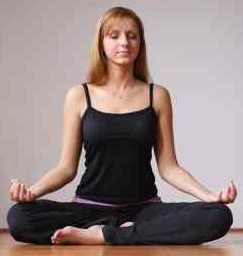 There's no limit to the things you can direct your attention toward: breath, mantras, images, colors, chakras, uplifting thoughts, higher dimensions, etc. Meditation is simply about attention - where you direct it, and how it alters your consciousness.
What is the purpose of meditation?
Traditionally meditation was - and still is - used for spiritual growth... becoming more conscious; realizing our spiritual Self; unfolding our inner light, love, wisdom and power; becoming more aware of a higher power in our lives; accelerating our journey home to our Spiritual Source.
More recently, meditation has become a valuable tool for finding a peaceful oasis of relaxation and stress relief in a demanding, fast-paced world.
Other uses include:
 |  |
You will find a lot of interesting and helpful information here at the Online Meditation Center, but if your main purpose is simply to learn how to meditate, here's what I suggest you focus on.
First, read the General Guidelines in this room. Next read the material in the FAQs Room -- and then go over the 8 Important Meditation Points. This will provide you with all the tips and general info you will need to get started.
Then try one of these three "Core Meditations"...
Mindfulness Meditation, Inner Light Meditation, or Universal Mantra Meditation. Or you might try all three, and then continue with whichever one you like best. These are all very easy and effective, and produce a broad range of results.
If you read the recommended information thoroughly, and follow the simple steps of one of the above-mentioned methods, you will quite likely find meditation to be easy and enjoyable, and you will soon start noticing positive results in your life.
1. Put your expectations aside, and don't worry about doing it right. There are infinite possibilities and no fixed criterion for determining right meditation. There are, however, a few things to avoid. They are...
 • Trying to force something to happen.
• Over-analyzing the meditation.
• Trying to make your mind blank or chase thoughts away.
• Putting too much emphasis on doing it right.
2. It's not necessary - or advisable - to meditate on a completely empty stomach. If you're hungry, have a little something to eat before meditating.
3. Find a quiet, comfortable place to meditate. You can sit in a comfortable chair, on the bed, on the floor... anywhere that's comfortable. It's not necessary to sit cross-legged.
4. Eliminate as much noise and as many potential distractions as possible. Don't worry about those things that you can not control.
5. When you sit to meditate, sit comfortably, with your spine reasonably straight. This allows the spiritual energy to flow freely up the spine, which is an important aspect of meditation. Leaning against a chair back, a wall, headboard, etc. is perfectly all right. If, for physical reasons, you can't sit up, lay flat on your back.
6. Place your hands in any position that is comfortable.
7. If it does not go against your beliefs, call on a "higher power" for assistance in your meditation. Any form you are comfortable with is all right. This can be quite helpful, but is not absolutely necessary.
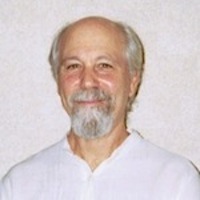 Jim Malloy is a meditation teacher currently living in Fairfield, Iowa. Trained in 1973 by Maharishi Mahesh Yogi and the International Meditation Society, he has been teaching meditation for 51 years. He has taught meditation classes throughout the U.S., in the U.K, and in Mexico., and now teaches globally via the Online Meditation Center, InsightTimer, YouTube, and various other streaming platforms.
To deepen his practice and further his teaching skills, he has studied with and received initiation from various spiritual teachers, including Swami Muktananda, Zen Master Shunryu Suzuki, Mata Amritanandamayi Devi - aka Amma, and the 16th Karmapa of the Tibetan Karma Kagyu lineage.
He is the author of "Evolve Please!" and "The Shift Goes On," and creator of the DailyOM course, "Meditation for Spiritual Awakening," the Udemy course, "How to Meditate with Surprising Ease,".
Worldwide Online Meditation Center |  |